
Category: Guides Ideal for: Founders, Ecommerce Managers, Small Teams, Operators
Most retailers know they should be monitoring competitors — but few do it well.
Not because they don’t care, but because competitor monitoring is usually:
- Manual
- Fragmented
- Time-consuming
- Easy to abandon
The good news? You don’t need a big team, complex dashboards, or constant meetings to stay on top of competitor changes.
You need a system.
Here’s how to build a simple, reliable competitor monitoring system that actually works — even with a small team.
---
Step 1: Stop Trying to Track Everything
The biggest mistake retailers make is trying to monitor:
- Every competitor
- Every product
- Every metric
This creates noise, not insight.
Instead, focus on change, not volume.
At a minimum, your system should track:
- Price changes
- New products
- Discontinued items
These three signals alone reveal most competitive moves.
For context on why change matters more than dashboards, see Why Furniture Retailers Need a Data Observer (Not Just a Dashboard).
---
Step 2: Decide What Triggers Action
Data without action is just reporting.
Define simple rules upfront, such as:
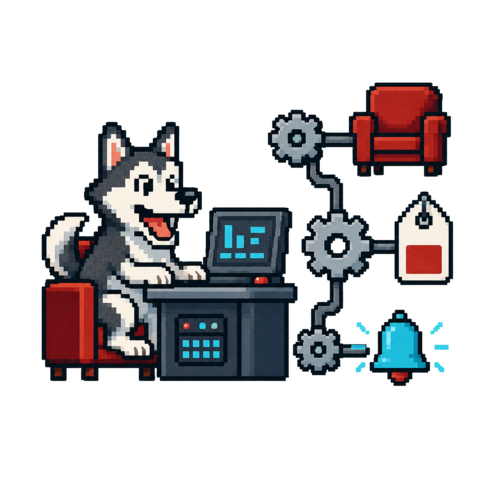
- Price drop → pricing review
- New product → merchandising comparison
- Discontinued product → SEO + ads opportunity
This turns monitoring into a workflow instead of a chore.
For practical examples, revisit From Data to Action: How to Turn Competitor Alerts Into Smarter Marketing Decisions.
---
Step 3: Automate Detection (This Is Non-Negotiable)
Manual checking fails because:
- People forget
- Priorities shift
- Teams get busy
- Coverage is inconsistent
Automation helps:
- Check the agreed scope on a repeatable schedule
- Reduce gaps caused by forgotten manual checks
- Keep the evidence available to more than one person
If you’re still checking competitor sites manually, start here: How to Track Competitor Prices Automatically.
---
Step 4: Centralise Alerts (Not Data)
You don’t need more dashboards. You need fewer, better alerts.
A good system delivers:
- Clear notifications
- Minimal noise
- Actionable context
This is especially important for small teams where attention is limited.
For the core data types that matter most, see Why Furniture Brands Should Track Competitors’ Products, Prices, Launches & Retirements.
---
Step 5: Review Once Per Week
Competitive intelligence doesn’t need daily meetings.
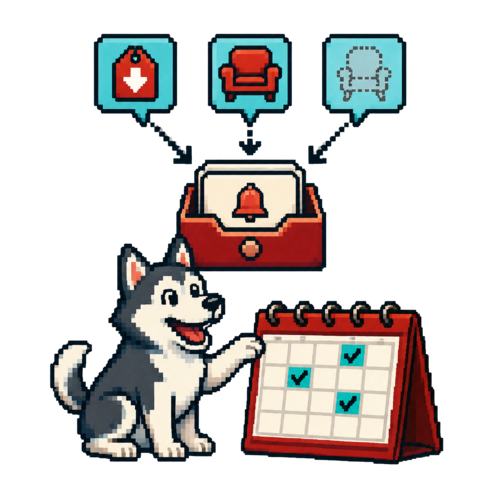
A simple weekly rhythm can work well:
- Review only the changes in the agreed competitor and category scope.
- Separate confirmed facts from assumptions that still need checking.
- Score impact and urgency.
- Assign one owner and due date for each follow-up.
- Record the decision, including when no action is needed.
Keep the meeting short, but preserve a clear decision log so the same change is not debated repeatedly.
This approach keeps teams aligned without slowing execution.
---
Common Mistakes to Avoid
❌ Over-monitoring
More data ≠ better decisions.
❌ Reacting emotionally
Not every competitor move requires action.
For pricing responses, see What to Do When a Competitor Drops Their Prices.
❌ Treating monitoring as “extra work”
If it’s not embedded into workflow, it won’t last.
---
The Takeaway
You don’t need a big team to stay competitive. You need:
- Focus
- Automation
- Clear triggers
- A repeatable system
Retailers who build competitor monitoring into their operations make calmer decisions, protect margins, and move faster — regardless of size.
Fido Fetch! was built to support exactly this kind of system, helping teams detect competitor changes automatically and act with confidence.